AI automation
Automating the steps between inboxes, documents and systems
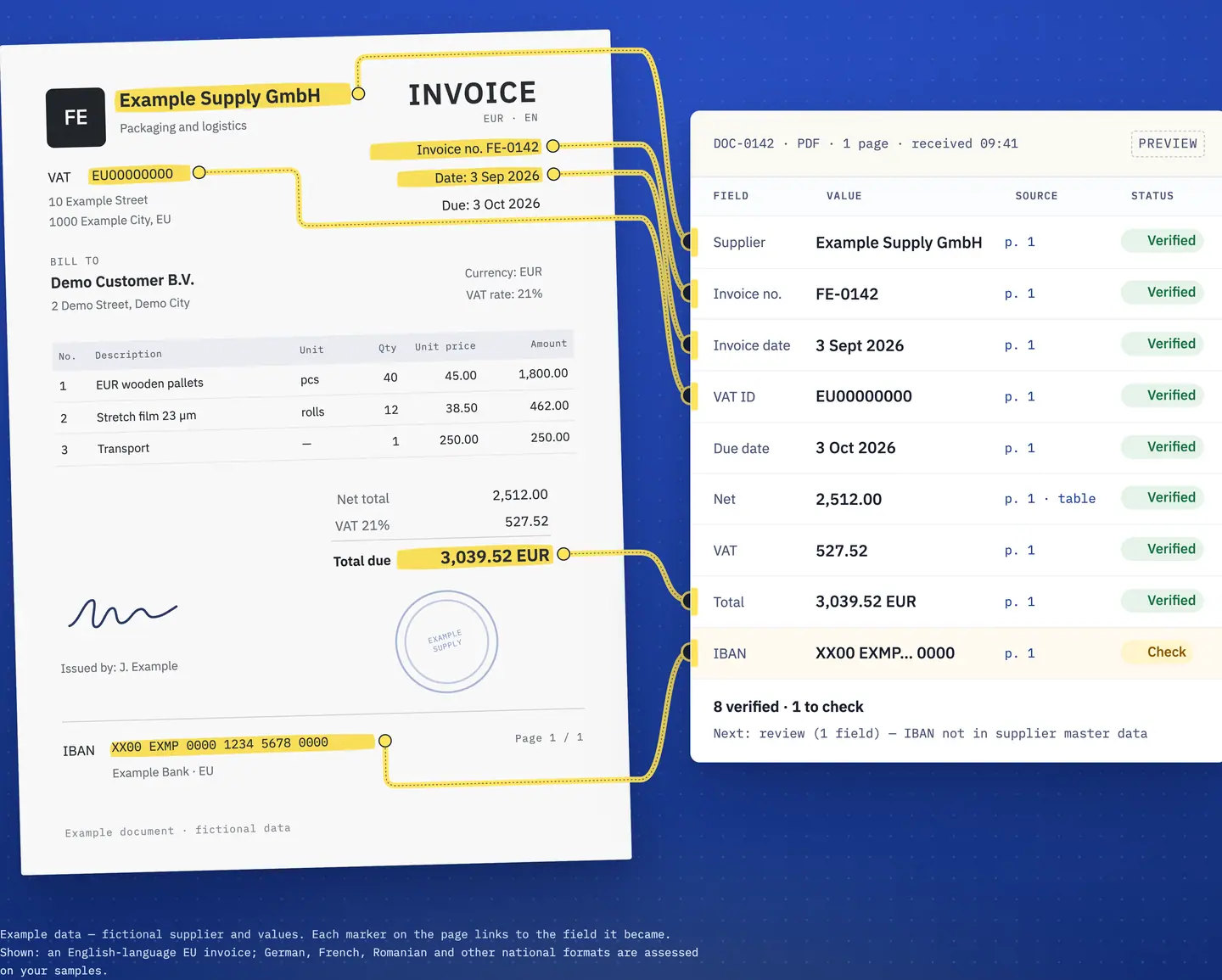
A lot of office work is just moving information around. Someone reads an email, opens the attachment, types the numbers into the ERP and forwards it to whoever approves it. We automate those chains. A model reads and classifies incoming documents and messages, pulls out the fields you need, checks them against your existing records and writes the result into the right system. Rules decide what goes straight through and what lands in a review queue. That way, people only see the cases that need judgement, such as a missing PO number, an amount over a limit or a supplier who is not in the database. Every run is logged with its input and output, so you can trace why something happened and adjust the rules when your process changes.
What your team receives
- Process map showing each step, system and decision point
- Extraction and classification for your document and message types
- Validation against existing records in your CRM, ERP or database
- Review queue for exceptions, with the reason shown for each case
- Run logs, alerts and a runbook for your team
Example scenario
Purchase invoices arrive by email in three formats from about forty suppliers. The workflow reads each invoice, matches it to the purchase order and delivery note in the ERP, and saves matched invoices as drafts. Price differences above 2% and unknown suppliers go to the accounts queue with the mismatched lines highlighted. The finance team approves the drafts every afternoon.
What you control
Data protection
Map approved data sources, access rules, retention and provider use before connecting AI to company information.
EU infrastructure options
Scope EU servers or self-hosting and disclose the processing location of model APIs, logs and backups.
Human approval
Agree where AI may suggest, where it may act and where a person must approve the next step.
How a project runs
Understand the work
We sit with the people who do the work, map the documents and systems involved, and agree on what “done” means before anything is built.
Ship a first testable version
A first version on your real data, early, not a slide deck. You test it with your team; we change it from what you see.
Get it ready to run
Permissions, backups, monitoring, documentation and training, so the system keeps working when we’re not in the room.
Stay after launch
Updates, fixes and legislative changes under the monthly licence; new work only against estimates you approve in writing.
Pairs with
Questions
Can we start small?
Yes. Start with one workflow, one team and an agreed outcome. We scope the pilot after learning about your data, systems and constraints.
Can our data stay in the EU?
We can scope EU-hosted or self-hosted options. The proposal identifies where each component processes and stores data, which providers are involved, and any transfer or remote-access implications. EU hosting alone does not establish compliance.
Can we use the tools we already have?
We start with your current workflow and systems. The proposal identifies the integrations, data access and handoffs needed for a useful first deliverable.
Proposal for AI automation
Tell us about the work, the people and the systems involved. We agree the first deliverable, data boundaries, scope and budget before work begins.
Request a proposal